
 DUTCH
DUTCH GERMAN
 FRENCH

Chhath Puja: The Festival of Sun Worship and Gratitude Across Generations

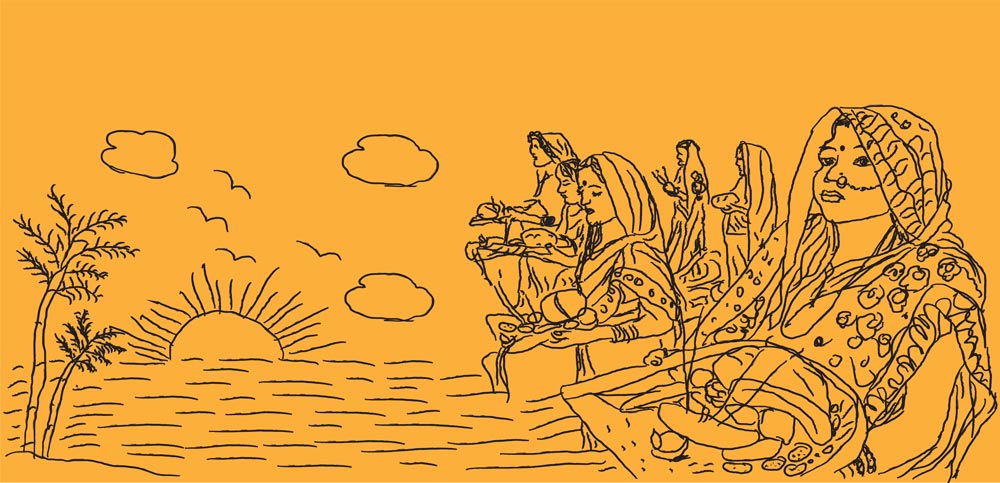
Chhath Puja: The Festival of Sun Worship and Gratitude Celebrated Across Europe
As the golden sun sets over European lakes and canals, the soft chant of “Om Surya Narayan Namah” fills the air. Chhath Puja is one of the most deeply rooted festivals in Indian tradition — celebrated with devotion by families originally from Bihar, Uttar Pradesh, and Suriname. Across Europe, these communities continue the ancient ritual of offering prayers to the Sun, blending faith, family, and nature into a shared moment of gratitude.
The Spiritual and Cultural Essence of Chhath Puja
Chhath Puja is among the oldest Vedic festivals, dedicated to Surya Dev (the Sun God) and Chhathi Maiya, the goddess said to sustain life on earth. The rituals reflect purity, discipline, and humility — a thanksgiving to the energy that nurtures all creation. Unique among Hindu festivals, Chhath is performed without priests, symbolising a direct bond between devotee and nature.
Its timeless message of living in harmony with the environment continues to inspire generations, from the Ganga’s banks in India to the Amstel and Scheldt rivers of Europe.


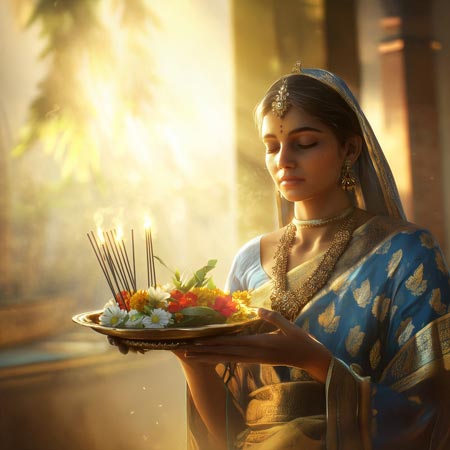
Four Sacred Days of Devotion
Day 1 – Nahay Khay
The festival begins with a purifying bath, followed by a simple meal of rice, chana dal, and bottle gourd (lauki). Families in Europe recreate the same satvik meals using local produce, preserving the essence of purity and gratitude.
Day 2 – Kharna
On this day devotees fast from sunrise to sunset, breaking it with homemade kheer and roti. The sweet aroma of jaggery and rice fills homes, marking the balance between austerity and abundance.
Day 3 – Sandhya Arghya
The most celebrated evening of Chhath Puja — offerings are made to the setting sun using fruits, sugarcane, and bamboo soop baskets. Across European cities, devotees gather near canals and lakes — from Amsterdam to Antwerp — dressed in vibrant colours, singing folk hymns that echo through the twilight.
Day 4 – Usha Arghya
Before sunrise, devotees assemble again to offer water and prayers to the rising sun. The fast ends with gratitude for light, energy, and family well-being, symbolising renewal and harmony.
The Flavours of Chhath: Food, Faith, and Tradition
Each dish prepared during Chhath Puja reflects simplicity and devotion. The star of the festival is Thekua – a crisp, sweet offering made with whole wheat flour and jaggery. Other favourites include kheer, puri, rice-lentil meals, and seasonal fruits like coconut, banana, and sugarcane.
Even across Europe, families continue to prepare these traditional foods with authentic ingredients such as atta, gur, ghee, and rice — all easily available through Ekirana’s festive grocery range — keeping the flavour of home alive abroad.
In our next post, discover the step-by-step recipe for Thekua — the sweet that captures the spirit of Chhath Puja.
Chhath Puja in Europe: A Shared Celebration of Heritage
From the Surinamese Hindustani communities of Rotterdam to Indian families in Brussels, The Hague, and Paris, Chhath Puja has become a bridge between generations. Local temples and community groups organise collective offerings, sing devotional songs, and share homemade prasad — reminding everyone that tradition travels wherever faith does.
Sustainability and Mindfulness: The Modern Meaning of Chhath
The festival’s principles — fasting, simplicity, and gratitude to natural elements — align closely with modern values of sustainability and mindful living. Devotees avoid plastics, use natural offerings, and focus on inner discipline, making Chhath Puja a timeless reflection of balanced, conscious living.
Conclusion: Gratitude That Travels Across Oceans
Whether on the banks of the Ganga in Patna or beside a canal in Rotterdam, the Sun rises on the same devotion. Chhath Puja reminds us that faith isn’t bound by geography — it lives wherever gratitude does. Across Europe, as families prepare their Thekua and offer their prayers, the golden light of Chhath connects hearts across continents.
Frequently Asked Questions
- What is Chhath Puja and why is it celebrated?
It is a Hindu festival dedicated to the Sun God and Chhathi Maiya, expressing gratitude for life and energy. - How long does Chhath Puja last and what are its main rituals?
The festival spans four days of fasting, purification, and offerings to the setting and rising sun. - Which foods are prepared during Chhath Puja?
Thekua, kheer, puri, rice, dal, and fruits like sugarcane and banana are offered as prasad. - How do people celebrate Chhath Puja in Europe?
Families gather near lakes or canals to perform the rituals, maintaining traditions from India and Suriname. - What is Thekua and why is it special?
Thekua is a sweet made of whole wheat and jaggery, symbolising purity and devotion.
In our next post, we share the step-by-step recipe for Thekua — the sweet prasad that captures the spirit of Chhath Puja.

10 Powerful Ganesha Slokas to Chant with Meaning
August 18, 2022


 >
>
Kerala Red Rice Puttu Recipe (Traditional Steamed Breakfast)
December 17, 2025
How to Make Rangoli at Home – Simple Step-by-Step Guide
December 14, 2025